

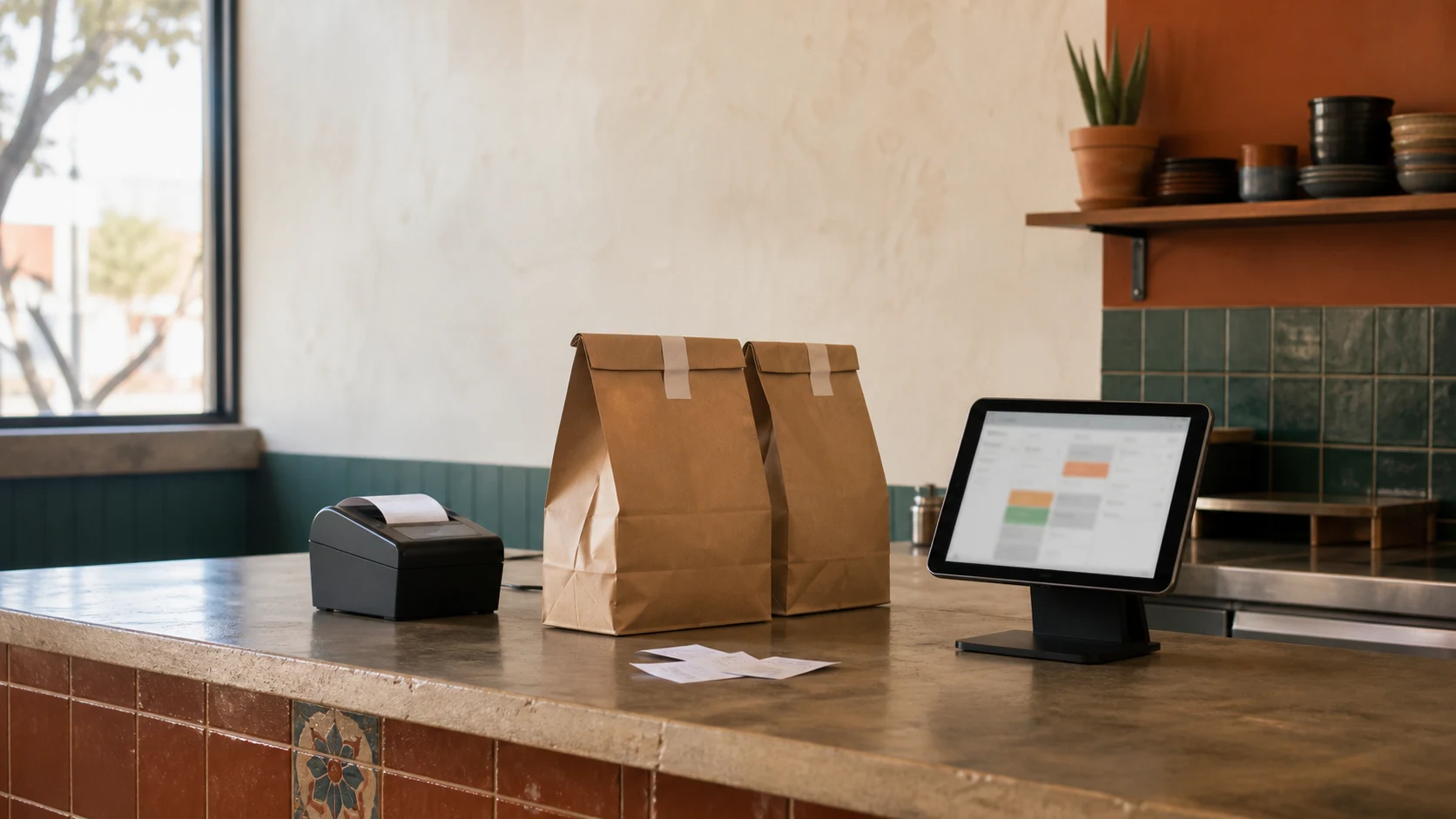
A restaurant can finish a busy pickup shift with a screen full of orders and still have an important question: how much of each sale stayed with the business?
Online ordering fees are not always easy to compare. One service may charge the restaurant a percentage of every order. Another may use a monthly subscription, a flat service fee, standard payment processing, or some combination of those costs. The words on the pricing page matter, but the way the system fits the restaurant matters too. “No commissions” is a useful starting point. It is not the whole decision.
What a Commission Changes
A commission is typically tied to the value of an order. When the check is larger, the fee grows with it. If a hypothetical platform charged 15 percent on a $30 order, the commission would be $4.50. That example is only arithmetic, not a claim about any particular company or rate.
The percentage model can be easier to accept when a marketplace is helping a new customer discover the restaurant. That visibility may be valuable. The harder question is whether the same percentage should apply when a regular customer already knows the restaurant and simply wants to place a pickup order.
Restaurant owners should know which role they are paying for. Is the service bringing demand through a marketplace? Is it processing an order that came from the restaurant’s own website, social page, menu, or QR code? Is it doing both? Those are different jobs, and they deserve a clear comparison.
No Commissions Does Not Mean No Costs
This distinction is easy to miss in marketing copy.
A no-commission ordering system does not take a percentage of the restaurant’s order total. Other costs can still exist. Standard card-processing fees may apply. A platform may charge the restaurant a subscription or setup fee. It may instead charge the customer a clearly displayed service fee.
Before choosing a system, write down every charge and who pays it:
- Commission charged to the restaurant
- Monthly or annual subscription
- Setup, hardware, or menu-entry costs
- Customer service or convenience fee
- Standard payment-processing fees
- Refund, dispute, or payout-related charges
- Optional delivery, marketing, or promotional costs
The useful question is not simply, “Is it free?” It is, “What does this order cost the restaurant and the customer, and when is each charge shown?”
Clear pricing protects trust on both sides of the counter.
Marketplace Discovery and Direct Ordering Solve Different Problems
A marketplace can place a restaurant in front of people who might not have searched for it by name. That discovery is a real part of the service. It can be especially useful when a restaurant is new, serving visitors, or trying to reach customers outside its usual audience.
Direct ordering starts from a different place. The customer already knows the restaurant or finds it through the restaurant’s own website, social presence, search listing, printed menu, or storefront. The ordering system helps that person complete a purchase without placing a marketplace between the restaurant and the order.
Neither route has to replace the other. Some restaurants may use a marketplace for reach and a direct channel for returning customers. Others may prefer one approach because it is easier for the team to manage.
What matters is knowing which channel a customer is using and what the restaurant receives in return for its cost.
The Order Still Has to Work During a Rush
Pricing gets attention, but operations decide whether the tool lasts.
Picture a Friday evening. The kitchen is moving, the phone rings, someone walks in early for pickup, and a new online order arrives. The system needs to make the next step obvious. Staff should be able to see the order, accept or decline it, understand the items and total, and keep the customer informed about what happens next.
Before committing to any ordering system, ask:
- Can staff clearly accept, decline, and review an order?
- When is the customer charged?
- How are new orders announced during a busy shift?
- Can the restaurant pause ordering or mark an item unavailable?
- Are pickup times and customer expectations easy to manage?
- Who updates the menu, prices, taxes, and availability?
- What happens when a customer needs a refund or disputes a charge?
- Is a real person available when the restaurant needs support?
A lower fee does not help if the workflow creates missed orders or confusion. A polished customer screen does not help if the restaurant side is difficult to operate. Both sides need to make sense.
Compare Control, Not Only Cost
Direct ordering can give a restaurant a clearer path between its own marketing and the customer’s purchase. A link on the restaurant website can lead to the restaurant’s menu. A QR code can lead to the same place. The business can explain pickup expectations in its own voice and keep its ordering experience connected to the rest of its online presence.
That control also creates responsibility. A direct ordering tool does not automatically create demand. The restaurant still needs to make the link visible, keep the menu current, and give customers a reason to use it.
When comparing options, look beyond the rate sheet:
- Customer path: How does someone find and place the order?
- Restaurant workflow: What must staff do from notification to pickup?
- Brand and information: Does the experience reflect the restaurant accurately?
- Customer relationship: Can the restaurant serve customers directly and lawfully use the information the system provides?
- Support: Who helps when a payment, menu, or order issue appears?
- Commitment: Is there a contract, subscription, hardware requirement, or minimum term?
The best choice is the one the restaurant understands and can use consistently.
How RiaRai Order Approaches Pickup Ordering
RiaRai Order is built for restaurants that want to receive pickup orders directly from customers. As of August 18, 2026, RiaRai does not charge the restaurant a commission or monthly subscription. Customers cover a $1 service fee, and standard payment-processing fees apply.
The current demo shows the restaurant side of the workflow, including a new order, its items and total, and the choice to accept or decline it. Nothing is charged until the restaurant accepts the order.
That model is intentionally straightforward, but it should still be evaluated against the way a particular restaurant operates. Menu setup, staff habits, customer communication, pickup volume, and the restaurant’s existing online presence all shape whether an ordering system is a good fit.
Ask for the Full Picture
“No commissions” answers one important question: whether the platform takes a percentage from the restaurant’s order. A careful decision asks a few more.
Who pays each remaining fee? What does the customer see? Does the system bring discovery, support direct ordering, or both? Can the staff use it during the busiest part of the day? Who helps when something goes wrong?
Get those answers in writing. Run a realistic order through the process. Look at both the customer experience and the restaurant screen. Then choose the model that fits the business, not simply the phrase that sounds best.
RiaRai Order offers one different approach: direct pickup ordering without a commission or subscription for the restaurant, with a $1 customer service fee and standard payment-processing fees. Restaurant owners can explore the current demo and decide whether that structure fits the way they want to take orders.
Direct pickup ordering
See How RiaRai Order Works
Explore the restaurant order flow and decide whether direct pickup ordering fits the way your team works.